
Industrial Flooring in Malaysia: How to Choose the Right System for Heavy-Duty Operations
Malaysia's industrial sectors demand flooring systems that do more than cover a surface — they must endure chemical spills, heavy machinery, and relentless foot traffic without failing.
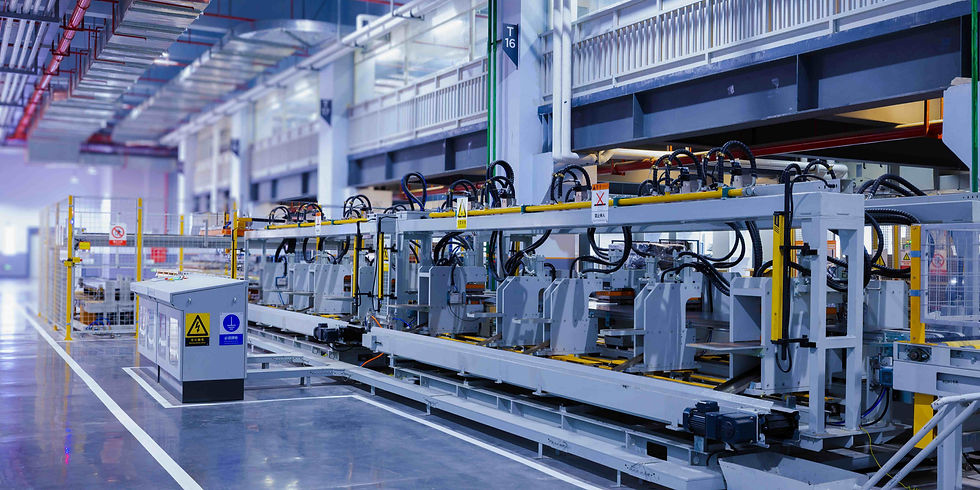
When it comes to building a facility that can truly perform under pressure, few decisions carry as much long-term consequence as the choice of industrial floor coating. Across Malaysia — from the sprawling logistics parks in Shah Alam to the petrochemical plants in Kerteh — the wrong flooring system can result in surface degradation, safety hazards, costly downtime, and expensive remediation work. Getting it right from the start is not just a technical preference; it is an operational necessity.
Not sure which industrial floor coating Malaysia specification suits your facility? This guide covers heavy-duty industrial flooring systems for Malaysian operations.
Why Industrial Flooring in Malaysia Requires Special Consideration
Malaysia's tropical climate introduces variables that many standard flooring specifications simply were not designed for. High ambient humidity, extreme heat, and the presence of moisture vapor rising from concrete substrates are conditions that can compromise adhesion, cause bubbling, and accelerate coating delamination. Any responsible industrial flooring Malaysia specification must account for these environmental realities before anything else is decided.
Beyond climate, the variety of industries operating across Peninsular Malaysia and East Malaysia creates equally varied demands. A food processing plant in Penang has fundamentally different requirements from an automotive assembly plant in Selangor or a cold storage warehouse in Johor Bahru. The flooring system must match the specific chemical exposure, load-bearing requirements, hygiene standards, and operational continuity needs of each environment.
Key insight: In Malaysia, substrate preparation accounts for up to 80% of a flooring system's long-term success. Moisture testing, surface profiling, and crack repair must be completed before any industrial floor coating is applied — regardless of the product used.

Common Types of Heavy-Duty Industrial Flooring Systems
Understanding the available systems is the first step toward making an informed choice. Each option addresses a different combination of performance demands, and selecting the right one often comes down to matching technical properties to operational priorities.
Epoxy Flooring Systems
Epoxy remains one of the most widely used heavy-duty industrial flooring solutions in Malaysia. It offers excellent chemical resistance, good compressive strength, and a seamless surface that is easy to clean and maintain. Self-levelling epoxy systems are particularly popular in pharmaceutical, food and beverage, and light manufacturing facilities where hygiene is paramount. For heavier operations involving forklifts and pallet stackers, high-build epoxy coatings in the range of 2mm to 3mm thickness provide adequate impact resistance for most warehouse and logistics applications.
Polyurethane (PU) Flooring
Polyurethane systems offer a degree of flexibility that epoxy cannot match, making them well-suited to environments subject to thermal cycling or vibration. In Malaysian cold rooms and food production areas where temperatures fluctuate significantly, PU flooring systems can absorb the expansion and contraction of the concrete substrate without cracking. They also tend to perform better than epoxy under prolonged UV exposure, which matters in partially open facilities or areas with significant natural light.
Polyurea Coatings
Polyurea is a fast-curing alternative that has gained traction in Malaysia's infrastructure sector. Its near-instant cure time — often measured in minutes rather than hours — makes it ideal for environments where downtime must be minimised. Secondary containment areas, water treatment facilities, and tank linings are among the most common polyurea applications seen in Malaysian industrial projects.
Cementitious Urethane (Screed) Flooring
For the most demanding thermal and chemical environments, cementitious urethane screed systems are the industry benchmark. Breweries, meat processing plants, and chemical manufacturing facilities in Malaysia regularly specify cementitious urethane because of its exceptional thermal shock resistance, high compressive strength, and outstanding adhesion even in the presence of moisture vapor — a property that makes it uniquely well suited to the Malaysian climate.
Hardened Concrete and Densifiers
In very large warehouse facilities where budget considerations and rapid installation are priorities, mechanically hardened concrete treated with chemical densifiers and surface sealers offers a practical baseline. While it does not provide the same level of chemical resistance as a resin system, a properly specified and applied concrete densifier treatment can significantly extend floor life in dry storage and logistics environments.
System | Best For | Chemical Resistance | Thermal Performance | Typical Thickness |
Epoxy | Warehouses, pharma, F&B | Good | Moderate | 1 – 3 mm |
Polyurethane | Cold rooms, food processing | Good | Very Good | 2 – 4 mm |
Polyurea | Containment, infrastructure | Very Good | Good | 1 – 3 mm |
Cementitious Urethane | Breweries, chemical plants | Excellent | Excellent | 6 – 9 mm |
Concrete Densifier | Dry storage, logistics | Low | N/A | Surface only |
How to Choose the Right Industrial Floor Coating for Your Facility
No single flooring system is universally correct. The right choice emerges from a structured evaluation of several overlapping factors, each of which narrows down the options until the appropriate specification becomes clear.
Define the Chemical Exposure Profile
The first and most critical question is: what substances will this floor encounter? Oils, hydraulic fluids, weak acids, strong alkaline cleaning agents, solvents — each category has implications for resin chemistry selection. A generic epoxy that performs well against mineral oils may fail rapidly when exposed to acetic acid or sodium hypochlorite, both of which are common in Malaysian food processing environments. Obtain a full list of chemicals in use and verify system compatibility before specifying any product.
Assess Mechanical Load Requirements
Foot traffic is rarely the limiting factor in industrial environments. Forklift wheel loads, racking leg point loads, and the shock loading from dropped materials all impose stress on a floor coating system that must be quantified. For operations running heavy counterbalance forklifts with solid rubber tyres — which generate very high contact pressures — a flooring system with a high Shore D hardness and good impact resistance is non-negotiable. This frequently points toward high-build epoxy broadcast systems or cementitious urethane screeds for the most demanding applications.
Consider Hygiene and Regulatory Requirements
Malaysia's food industry operates under Department of Veterinary Services (DVS) and Ministry of Health (MOH) facility standards that set expectations for flooring materials in food contact zones. Seamless, non-porous surfaces with coving at wall junctions are typically required. For pharmaceutical manufacturing, Good Manufacturing Practice (GMP) guidelines similarly prescribe flooring characteristics. Understanding the applicable regulatory framework before specifying a system prevents costly non-compliance issues later.
Evaluate Substrate Condition and Moisture Levels
Malaysia's ground conditions and construction practices mean that moisture vapor transmission from concrete slabs is a common challenge. Before any resin system is applied, a moisture vapor emission rate (MVER) test should be conducted. If moisture levels exceed the manufacturer's specified tolerance — which varies by product — a specialist moisture-tolerant primer or an alternative system must be used. Skipping this step is one of the most common reasons for premature flooring failure in Malaysian industrial projects.
Account for Downtime Constraints
In continuous production facilities, every hour of installation represents lost output. Fast-cure systems such as polyurea or methyl methacrylate (MMA) acrylics can return a floor to service within a few hours, compared to 24–48 hours for standard epoxy. While these fast-cure materials typically carry a higher material cost, the reduction in operational downtime often justifies the premium, particularly in high-throughput facilities.

Industrial Flooring Malaysia: Key Questions to Ask Your Contractor
Even when the system type has been decided, implementation quality determines the outcome. A well-specified flooring system installed poorly will underperform compared to a competently installed mid-range product. When evaluating contractors for industrial flooring installation in Malaysia, several questions cut through to what actually matters.
Ask whether the contractor performs in-house substrate preparation, including mechanical grinding and shot-blasting, or subcontracts this work. Ask how they conduct moisture testing and what action they take when readings exceed thresholds. Ask for references from comparable projects — not residential or commercial work, but genuinely comparable industrial environments — and visit those sites if possible. Ask about the warranty structure and whether it covers both materials and workmanship as separate items or as a combined obligation.
The quality of the answer to these questions tells you as much about a contractor's competence as their portfolio does. Experienced industrial flooring specialists in Malaysia speak in specifics: DPM primer at 0.3 kg/m², broadcast aggregate at 4 kg/m², recoat window of 12 to 24 hours. Vague answers are a signal worth heeding.
Long-Term Performance and Maintenance of Heavy-Duty Industrial Flooring
The total cost of an industrial flooring system is not its installation cost — it is its installation cost plus its maintenance cost over the facility's operating life. A system that requires annual touch-up works in a production environment has a very different total cost profile from one that can be cleaned and maintained for a decade with minimal intervention.
Routine maintenance for resin flooring systems in Malaysian facilities typically involves daily cleaning with pH-neutral detergents, periodic deep cleaning to remove embedded contaminants, and visual inspection for crack propagation or delamination at edges and joints. Traffic management — directing forklifts along defined routes, installing protective curbing at vulnerable corners — extends floor life significantly and at minimal cost. Planned maintenance inspections every 12 to 18 months allow minor damage to be repaired before it propagates into a more expensive remediation project.
When a floor does need repair, patch compatibility is an important consideration. Some resin systems accept compatible patch materials readily; others require proprietary products or careful preparation to achieve an adequate bond. This is worth discussing with your contractor at specification stage, not after the floor is already installed and beginning to show wear.

Frequently Asked Questions About Industrial Flooring in Malaysia
How long does an industrial flooring installation typically take in a Malaysian facility?
Installation timelines depend on the system type and the floor area involved. A standard epoxy system for a 1,000 m² warehouse typically requires three to five working days including substrate preparation and cure time.
Cementitious urethane screeds may take longer due to multi-layer application requirements. Fast-cure systems such as polyurea can reduce installation time significantly, sometimes returning a floor to service within 24 hours of the application process beginning.
Can industrial flooring systems be applied directly over existing concrete floors in Malaysia?
In most cases, yes — but surface preparation is critical. Existing concrete must be assessed for structural integrity, surface contamination (oil, grease, curing compounds), and moisture content before any resin coating is applied. Mechanical preparation by diamond grinding or shot-blasting is almost always required to achieve the surface profile needed for adequate adhesion. Contaminated or structurally compromised substrates may require partial demolition and repair before a new system can be installed.
What is the typical lifespan of an epoxy or polyurethane floor in a Malaysian industrial facility?
With proper substrate preparation, correct system specification, and routine maintenance, a well-installed epoxy floor in a moderate-duty environment can last 10 to 15 years before requiring significant renovation. Polyurethane and cementitious urethane systems in more demanding environments typically achieve 8 to 12 years of serviceable life. Lifespan is heavily influenced by actual usage conditions and the quality of ongoing maintenance — facilities that implement structured maintenance programmes consistently achieve the upper end of these ranges.
Where to Get a Trusted Industrial Flooring Contractor for Heavy-Duty Industrial Flooring Systems in Malaysia
We provide expert oversight and installation for high-quality industrial flooring works across Malaysia, including heavy-duty industrial floor coating systems, warehouse flooring, epoxy floor systems, and full facility flooring upgrades. Our services are suitable for both Industrial Flooring in Malaysia and commercial projects, ensuring long-term performance without compromising operational requirements.
Whether you need Heavy-Duty Industrial Flooring Systems for manufacturing plants, logistics hubs, food processing facilities, or chemical handling areas, or Industrial Floor Coating Malaysia solutions for maintenance and refurbishment works, each project is tailored to your specific loading conditions, chemical exposure profile, and operational continuity requirements — providing the best combination of durability, safety, and value.
Our coverage spans the entire country, including Kuala Lumpur, Selangor, Klang Valley, Johor Bahru, Penang, Malacca (Melaka), Seremban, Negeri Sembilan, Perak, Pahang, Kuantan, Kelantan, Terengganu, Perlis, Alor Setar Kedah, and East Malaysia's Sabah and Sarawak. We also serve regional clients across Southeast Asia (SEA), including Singapore, Thailand, Indonesia, Vietnam, Cambodia, the Philippines, Brunei, Myanmar, and beyond.
From new construction flooring specifications and existing floor refurbishment to complete industrial facility fit-outs, our team integrates proven industrial floor coating systems and material expertise to deliver solutions that meet the highest standards for Industrial Flooring in Malaysia. For enquiries, email us at info@aathaworld.com or call/WhatsApp +6011-7001 1003 (Mon–Fri) or +6011-1128 8588 (Sat, Sun & Public Holidays) to find the best industrial flooring solutions in Malaysia.


