
Factory Refurbishment vs New Construction in Malaysia: Which Wins?
Factory refurbishment vs new construction — compare costs, timelines & ROI for Malaysia industrial projects. Find out which option suits your business best.

Factory Refurbishment vs New Construction Malaysia: Which Wins?
When a manufacturing company outgrows its current space or finds that ageing infrastructure is holding back operations, the management team almost inevitably arrives at the same crossroads: should we refurbish the existing factory, or is it time to build something entirely new? This is one of the most consequential decisions in industrial real estate planning, and it is not one that should be made on instinct alone.
In Malaysia, where the industrial sector has been growing steadily across regions such as Selangor, Johor Bahru, Penang, and Perak, both factory refurbishment and new construction carry meaningful advantages and trade-offs. The right choice depends on a range of factors — budget, urgency, land availability, regulatory compliance, and long-term operational goals. This article breaks down both approaches in detail so you can make a well-informed decision that serves your business for decades to come.
Understanding Factory Refurbishment in Malaysia
Factory Refurbishment in Malaysia refers to the process of upgrading, renovating, or repurposing an existing industrial building to meet new operational requirements. It may involve structural repairs, electrical rewiring, roofing replacement, interior reconfiguration, upgrading of mechanical and electrical (M&E) systems, installation of new ventilation and HVAC, fire suppression improvements, and compliance upgrades to meet current DOSH or CIDB standards.
Why Businesses Choose Refurbishment
The primary draw of refurbishment is cost efficiency. In many cases, companies can achieve 40 to 60 percent of the functional outcome of a new build at a fraction of the cost. If the existing factory's foundation, structural columns, and main load-bearing walls are still sound, much of the essential skeleton is already there — the project cost is redirected toward finishes, systems, and internal layouts rather than groundwork and structure from scratch.
Speed is another critical advantage. A new construction project in Malaysia, depending on the scale, can take anywhere from 18 to 36 months from the planning stage to handover. Industrial Building Renovation Malaysia projects, by contrast, are often completed within 6 to 14 months, depending on scope. For businesses that cannot afford an extended production pause or need to scale quickly due to contract commitments, refurbishment may be the only viable timeline.
There is also the matter of location. Prime industrial zones — such as Shah Alam, Prai Industrial Area in Penang, or Pasir Gudang in Johor — have limited land availability. If your existing factory sits in a strategically valuable location close to ports, highways, or supplier networks, giving it up to build elsewhere could mean logistical disadvantages that outweigh the benefits of a newer structure. Retaining that address while modernising the building is often the smarter commercial decision.
Challenges of Factory Refurbishment
That said, refurbishment is not without complications. Older factories, especially those built in the 1980s and 1990s, may have hidden structural issues that only surface once walls are opened or floors are broken. Asbestos-containing materials, outdated electrical panels, insufficient floor load capacity, and poor drainage design are among the most common unwelcome discoveries during industrial renovation work.
There is also the issue of operational disruption. Unlike building a new factory on a vacant lot — which can happen in parallel to ongoing production — a refurbishment project often requires partial or full stoppage of factory operations. This demands careful phasing plans and close collaboration between the contractor and the client's operations team.
Additionally, some factories are simply not worth saving. If the building has reached the end of its structural lifespan, requires so much remediation that costs rival new construction, or cannot be reconfigured to support modern workflow and automation requirements, renovation becomes an exercise in throwing good money after bad.

Understanding New Factory Construction Malaysia
New Factory Construction Malaysia is the process of designing and building an industrial facility from the ground up on a prepared site. This approach gives the client complete control over layout, specifications, materials, structural design, and future scalability.
Why Businesses Choose New Construction
The most compelling case for new construction is the ability to design precisely for purpose. Modern manufacturing increasingly relies on specific floor-to-ceiling heights for racking systems and automated machinery, precise floor flatness tolerances, heavy electrical loads, clean room environments, or specialised drainage requirements. A factory built new can incorporate all of these from day one — eliminating the compromises that come with retrofitting a decades-old structure.
Long-term maintenance costs also tend to be lower with new builds. All systems — roofing, electrical, plumbing, HVAC, fire suppression — are installed fresh with modern materials and current standards. Warranties from contractors and systems manufacturers apply in full. There is no inherited decay to manage.
For companies with aggressive growth plans, new construction also offers superior scalability. A properly designed greenfield factory can include structural provisions for future expansion — additional bays, mezzanine floors, extended production lines — built into the original design at minimal extra cost. Retrofitting for expansion in an older building is rarely as clean or cost-effective.
From a financing perspective, some investors and lenders respond more favourably to new industrial assets. A newly constructed factory on freehold industrial land may carry stronger asset value and collateral quality compared to a refurbished older structure. This can matter for companies seeking to leverage property as security for business financing.
Challenges of New Factory Construction
The most obvious challenge is cost. New factory construction in Malaysia typically demands a significantly higher capital outlay than refurbishment. When you factor in land acquisition or long-term lease commitments, earthworks and piling, construction materials, M&E systems, compliance works, landscaping, and internal fit-out, the total cost can be two to three times that of a comparable refurbishment project.
Time is another challenge. New Factory Construction Malaysia projects require detailed architectural and structural design, approvals from local authorities (PBT), Jabatan Alam Sekitar (DOE), BOMBA, and sometimes the Department of Occupational Safety and Health (DOSH), before a single beam is erected. Delays in planning approvals, soil investigation surprises, or contractor capacity issues can push timelines well beyond initial projections.
There is also the issue of embedded disruption. If a company currently occupies a functioning factory and needs to build a new one before it can vacate, it must either operate from two locations temporarily, lease interim space, or stagger the move — all of which add operational complexity and cost.

Factory Refurbishment vs New Construction: A Side-by-Side Comparison
Cost Comparison
Factory Refurbishment in Malaysia generally costs between RM 80 to RM 250 per square foot depending on the scope of works, condition of the existing structure, and finishes required. New construction projects typically range from RM 180 to RM 400 per square foot or higher for specialised facilities. The gap widens significantly when land cost is factored into new construction.
Timeline Comparison
Industrial Building Renovation Malaysia projects tend to move faster when the structural shell is retained. A moderate-scale refurbishment can be completed in 6 to 12 months. A new construction project of comparable size typically requires 18 to 30 months from concept design to operational readiness.
Regulatory and Compliance Considerations
Both approaches require compliance with Malaysian building codes, UBBL 1984 (Uniform Building By-Laws), Fire Services Act, and relevant DOSH regulations for industrial facilities. However, new construction in Malaysia must go through a longer sequence of regulatory approvals before commencement, while refurbishment projects may qualify for a simpler modification permit depending on the scope of works. Engaging a registered contractor with CIDB Grade G5 and above is advisable for both types of projects to ensure compliance documentation is properly managed.
Environmental Sustainability
From a sustainability standpoint, factory refurbishment has an increasingly strong case. Demolishing a structurally sound building and replacing it generates substantial construction waste and carbon emissions from new material production. Refurbishment, particularly when it incorporates energy-efficient upgrades such as LED lighting, solar panel installation, improved insulation, and modern HVAC systems, can significantly reduce a factory's carbon footprint while extending the building's useful life by 20 to 30 years.
Malaysian companies eyeing green certifications such as GreenRE or Green Building Index (GBI) may find that a well-planned refurbishment project offers a pathway to certification at a more manageable cost than a full new build.
Which Option Is Right for Your Business?
There is no universally correct answer to the Factory Refurbishment vs New Construction debate. The decision depends on a honest assessment of several factors specific to your situation.
Choose Factory Refurbishment in Malaysia if your existing building's structure is sound, your timeline is tight, your budget is constrained, and your location is strategically important. It is also the better choice if the reconfiguration needed to meet your new operational requirements can be achieved without major structural demolition.
Choose New Factory Construction Malaysia if you require a facility purpose-built for highly specialised operations, if your existing building is beyond economical repair, if you have the capital and timeline flexibility to accommodate a longer build, or if you want a new industrial asset with full warranty coverage and modern compliance from the ground up.
In many cases, working with an experienced construction management and industrial renovation contractor early in the decision-making process can save months of deliberation. A qualified professional can assess the existing structure, model costs for both scenarios, and give you a clear, evidence-based recommendation tailored to your operational context.
The Hybrid Approach: Partial Demolition and Rebuild
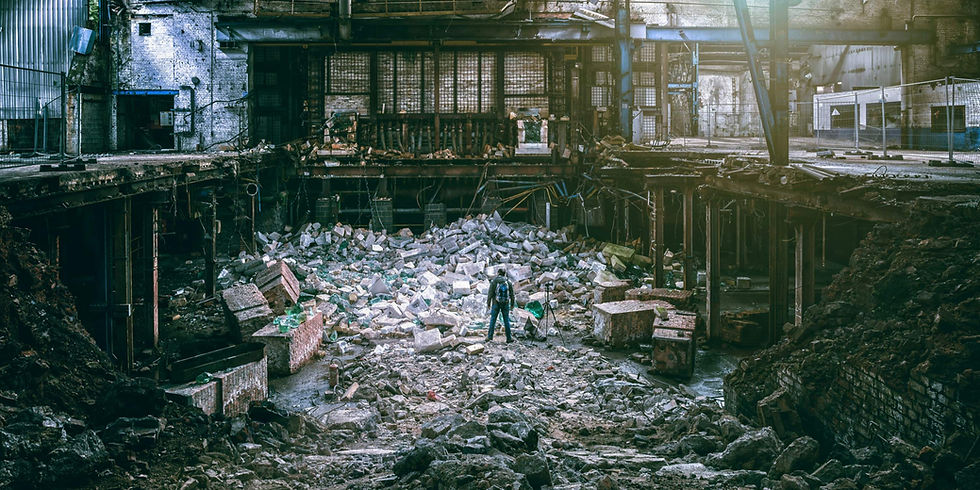
It is worth noting that the choice is not always binary. In some cases, the most practical and cost-effective solution is a hybrid strategy — where certain portions of an existing factory are retained while others are demolished and rebuilt. This approach is particularly relevant when one section of a facility is structurally sound and well-positioned for continued use, while another section is too deteriorated or incompatible with new operational requirements to justify saving.
For example, a factory may have an administrative block, loading bay, and perimeter fencing that remain fully functional, while the main production floor is too low-ceilinged, poorly ventilated, or inadequately piled for modern machinery loads. In this scenario, retaining the peripheral structures while demolishing and rebuilding the core production area can achieve 70 to 80 percent of the benefit of a full new build at a considerably lower cost and faster timeline.
This kind of approach requires careful phasing and a contractor experienced in working within partially occupied industrial sites. Safety management, dust and vibration control, and maintaining utilities to unaffected sections of the building are all critical considerations that demand detailed planning before ground is broken. In Malaysia, projects of this nature also require close coordination with the local authority and BOMBA to ensure that permits correctly reflect the hybrid scope of works.
FAQ
Q1: Is factory refurbishment cheaper than building a new factory in Malaysia?
In most cases, yes. Factory Refurbishment in Malaysia typically costs significantly less than new construction, especially when the existing structural frame is retained. However, if the building has major structural defects or requires extensive remediation, the cost gap can narrow considerably. Always get a structural assessment before committing to refurbishment.
Q2: How long does Industrial Building Renovation Malaysia typically take?
The timeline varies depending on the scope of work. A straightforward Industrial Building Renovation Malaysia project — such as M&E upgrades, new flooring, roofing replacement, and internal reconfiguration — can be completed in 6 to 12 months. More complex refurbishments involving structural modifications, compliance upgrades, and phased construction to maintain operations may take up to 18 months.
Q3: Do I need special permits for factory refurbishment in Malaysia?
Yes. Depending on the scope of works, you may need a renovation permit from the local authority (PBT), BOMBA approval for fire safety systems, and potentially DOSH notification for industrial structures. A licensed and CIDB-registered contractor will manage the required documentation and submissions as part of the project.

Where to Get a Trusted Contractor in Malaysia for Factory Refurbishment and Industrial Construction
Whether you are pursuing Factory Refurbishment in Malaysia or embarking on New Factory Construction Malaysia, the quality of your contractor determines the outcome of your project far more than any other single factor. Engaging a team with deep experience in Industrial Building Renovation Malaysia — from structural assessment and M&E design to regulatory compliance and project management — protects your investment and keeps your project on schedule.
Whether you need Factory Refurbishment in Malaysia for an ageing facility, a complete Industrial Building Renovation Malaysia to meet new production requirements, or a full New Factory Construction Malaysia project for a greenfield site, each project is tailored to your specific operational needs — delivering the best combination of function, safety, regulatory compliance, and long-term value.
Our coverage spans the entire country, including Kuala Lumpur, Selangor, Klang Valley, Johor Bahru, Penang, Malacca (Melaka), Seremban, Negeri Sembilan, Perak, Pahang, Kuantan, Kelantan, Terengganu, Perlis, Alor Setar Kedah, and East Malaysia's Sabah and Sarawak. We also serve regional clients across Southeast Asia (SEA), including Singapore, Thailand, Indonesia, Vietnam, Cambodia, the Philippines, Brunei, Myanmar, and beyond.
From factory refurbishment and warehouse upgrades to new industrial builds, hotels, resorts, or public infrastructure, our team integrates modern construction methods and material solutions to deliver expert results that meet the highest standards for industrial and commercial projects in Malaysia.
For enquiries, email us at info@aathaworld.com or call/WhatsApp +6011-7001 1003 (Mon–Fri) or +6011-1128 8588 (Sat, Sun & Public Holidays) to find the best construction management solutions in Malaysia.


